

A lot of people get the dentist worried out of their system by finding out what is going to happen during their visit. Many dental appointments are routine and are similar and follow a similar pattern.
Visual Examination of Teeth and Gums
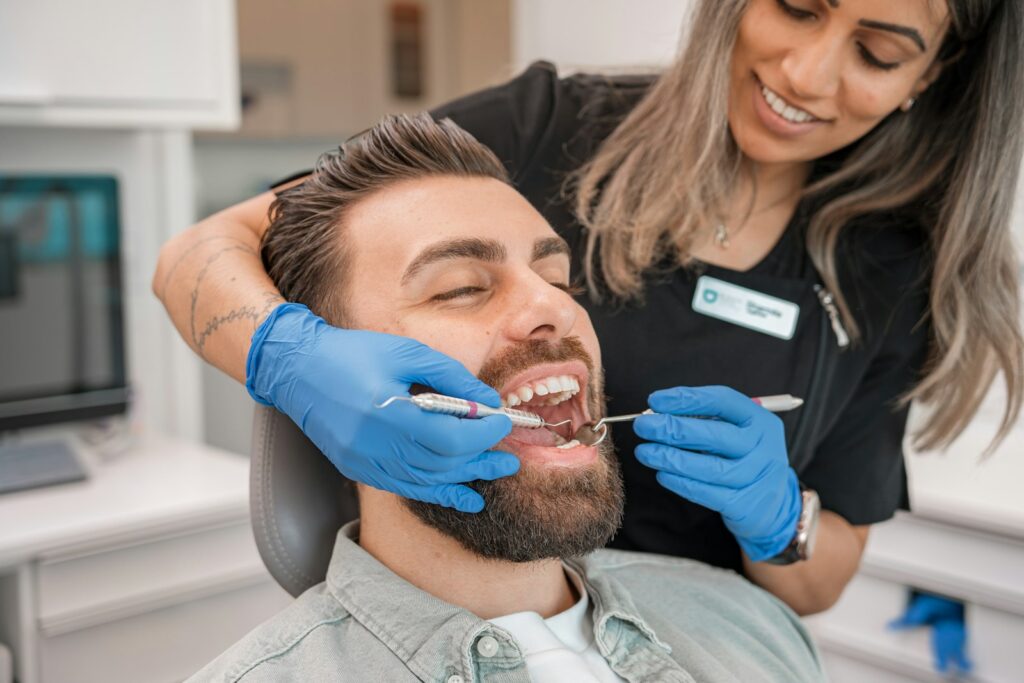
A dentist examines all the teeth in the mouth for signs of decay, damage or wear. The dentist also looks at the gum line for signs of redness or inflammation.
Oral Cancer Screening
The dentist checks your mouth for unusual patches or lumps on your tongue, cheeks and in the rest of your mouth’s soft tissue. Early detection of changes to the oral tissues is critical in treating oral cancer.
X-Rays When Needed
Though X-rays are usually only taken at certain dental appointments, they can reveal signs of tooth decay and changes to the bone supporting the teeth that cannot be seen by the naked eye. See also Dentist Bournemouth.
Gum Health Assessment
A small dental probe is used to measure the depth of the gum grooves. A shallow reading for a healthy gum is typical while an abnormally deep reading can indicate the onset of gum disease.
Scale and Polish
Your teeth are then cleaned using a ‘dental scaler’ to remove any hardened plaque from your teeth. After this your teeth are polished using a mild toothpaste to help remove any stains on your teeth. This is usually done by a dentist or dental hygienist.
Advice and Next Steps
The dentist will also discuss any other oral health concerns you have, and possibly recommend further treatment. He/she will also advise on when to return to the dentist for further check-ups.
Knowing what to expect at your dental appointment will help to make your experience much easier.
Why your gums matter as much as your teeth
Much of a check-up focuses on the gums, and for good reason. Gums anchor the teeth and keep them firm, and their condition affects your general health as well as your smile. Brushing teeth and gums at least twice a day, with any kind of toothbrush, and flossing regularly are the habits that keep them healthy between visits.
Bleeding gums are a sign of gum disease and are worth raising with your dentist rather than ignoring. When gums bleed, bacteria from the mouth can enter the bloodstream, and inflamed blood vessels have been linked to serious problems such as heart attacks and strokes.
Gum disease also has effects you can see and feel. Gums that have been diseased for a while begin to recede, leaving the tooth poorly supported, so it can loosen and eventually be lost. The bacteria involved are also a common cause of bad breath, which is one more reason to keep regular appointments.
Looking after your teeth between appointments
A check-up works best alongside a good routine at home, because the health of your mouth plays a big part in your overall health. Brush twice a day, whether with a manual or an electric toothbrush, and ideally after meals or fizzy drinks too. Mouthwash helps, and flossing clears plaque and bacteria that build up between the teeth and along the gumline.
Even the most careful brushing cannot reach everywhere. That is why the scale and polish at a routine visit matters, as it removes plaque from areas you cannot clean properly yourself.
Regular appointments also mean problems are spotted while they are still in the early stages and easier to treat. Your dentist is looking for the first signs of gum disease and for changes that could point to mouth or throat cancers, so keeping up with check-ups gives the best chance of catching anything before it gets out of hand.
Why regular check-ups protect more than your teeth
Routine appointments are about more than a nice smile. Poor dental hygiene can lead to gum disease, which is thought to be linked to serious health conditions elsewhere in the body, including heart disease. Catching problems early through regular visits helps prevent decay and disease and supports your health in general.
National Smile Month, the UK’s longest running oral health campaign, was launched in 1977 to raise awareness of dental health. It promotes three simple messages: brush your teeth at least twice a day, cut down on sugary foods and drinks, and visit your dentist regularly. A large part of the campaign is reassuring people that a check-up is nothing to fear.
Some people avoid the dentist for years and ignore warning signs such as bleeding gums, toothache, bad breath, mouth infections or loose teeth, and come to feel their teeth are beyond help. Even serious problems can usually be treated, so it is worth booking that overdue appointment rather than putting it off.